
The Ultimate Scientific Metaphor Sermon Builder
Customize your Sermon & Worship: Story & Illustration Scientific Metaphors prompt below.
Step 1: Scientific Disciplines (The Foundation)
Select your preferences for Scientific Disciplines (The Foundation) below.
Step 2: Cosmology & Astronomy (Vastness & Creation)
Select your preferences for Cosmology & Astronomy (Vastness & Creation) below.
Step 3: Physics & Quantum Mechanics (Unseen Realities)
Select your preferences for Physics & Quantum Mechanics (Unseen Realities) below.
Step 4: Biology & Anatomy (Body of Christ)
Select your preferences for Biology & Anatomy (Body of Christ) below.
Step 5: Botany & Ecology (Growth & Interdependence)
Select your preferences for Botany & Ecology (Growth & Interdependence) below.
Step 6: Chemistry & Transformation (Change & Purity)
Select your preferences for Chemistry & Transformation (Change & Purity) below.
Step 7: Earth Sciences & Geology (Foundations & Time)
Select your preferences for Earth Sciences & Geology (Foundations & Time) below.
Step 8: Meteorology & Atmospheric Science (Spirit)
Select your preferences for Meteorology & Atmospheric Science (Spirit) below.
Step 9: Technology & Computer Science (Connection)
Select your preferences for Technology & Computer Science (Connection) below.
Step 10: Medical Science & Healing (Restoration & Grace)
Select your preferences for Medical Science & Healing (Restoration & Grace) below.
Step 11: Theological Themes to Connect (The Application)
Select your preferences for Theological Themes to Connect (The Application) below.
Step 12: Audience Demographics & Tone (The Delivery)
Select your preferences for Audience Demographics & Tone (The Delivery) below.
Step 13: Sermon / Message Structure (The Framework)
Select your preferences for Sermon / Message Structure (The Framework) below.
Step 14: Desired Emotional Impact / Response (The Goal)
Select your preferences for Desired Emotional Impact / Response (The Goal) below.
Step 15: Context & Specifics
Enter any specific details, scriptures, or overarching goals for this message.
Step 16: Your Custom Prompt
Copy your prompt below.
MiraclePrompts.com is designed as a dual-engine platform: part Creation Engine and part Strategic Consultant. Follow this workflow to engineer the perfect response from any AI model.
-
1. Navigate the 14 Panels
The interface is divided into 14 distinct logical panels. Do not feel pressured to fill every single one—only select what matters for your specific task.
Use the 17 Selectors: Click through the dropdowns or buttons to define parameters such as Role, Tone, Audience, Format, and Goal.
Consult the Term Guide
Unsure if you need a "Socratic" or "Didactic" tone? Look at the Term Guide located below/beside each panel. It provides instant definitions to help you make the pro-level choice.
-
3. Input Your Data (Panel 15)
Locate the Text Area in the 15th panel.
Dump Your Data: Paste as much information as you wish here. This can be rough notes, raw data, pasted articles, or specific constraints.
No Formatting Needed: You don’t need to organize this text perfectly; the specific parameters you selected in Phase 1 will tell the AI how to structure this raw data.
- 2. The Pro Tip Area (Spot Check) Before moving on, glance at the Pro Tip section. This dynamic area offers quick, high-impact advice on how to elevate the specific selections you’ve just made.
4. Miracle Prompt Pro: The Insider’s Playbook
Master the Mechanics: This isn't just a help file; it contains 10 Elite Tactics used by expert engineers. Consult this playbook to unlock advanced methods like "Chain of Thought" reasoning and "Constraint Stacking."
- 5. NotebookLM Power User Strategy Specialized Workflow: If you are using Google’s NotebookLM, consult these 5 Tips to leverage audio overviews and citation features.
-
6. Platform Deployment Guide
Choose Your Weapon: Don't just paste blindly. Check this guide to see which AI fits your current goal:
- Select ChatGPT/Claude for creative reasoning.
- Select Perplexity for real-time web search.
- Select Copilot/Gemini for workspace integration.
- 7. Generate Click the Generate Button. The system will fuse your Phase 1 parameters with your Phase 2 context.
-
8. Review (Panel 16)
Your engineered prompt will appear in the 16th Panel.
Edit: Read through the output. You can manually tweak or add last-minute instructions directly in this text box.
Update: If you change your mind, you can adjust a panel above and hit Generate again. - 9. Copy & Deploy Click the Copy Button. Your prompt is now in your clipboard, ready to be pasted into your chosen AI platform for a professional-grade result.
Need a refresher? Check the bottom section for a rapid-fire recap of this process and answers to common troubleshooting questions.
The Ultimate 16-Step Miracle Prompts Pro:
Strategic Scientific Sermon Metaphors
Mastering Sermon & Worship: Story & Illustration Scientific Metaphors is the definitive bridge from novice to expert for modern communicators and pastors. This forensic tool allows you to architect precision-guided messages, establishing dominance in illustrative storytelling and deep, resonant preaching that connects timeless theological truths with the awe-inspiring realities of the natural world.
Step Panel Term Reference Guide
Step 1: Scientific Disciplines (The Foundation)
Why it matters: Selecting the correct foundational discipline determines the overarching scale and vocabulary of your illustration, ensuring the metaphor aligns with the theological weight of your message.
- Astrophysics: Leverage the macro-scale of the universe to illustrate God's infinite nature and sovereignty.
- Quantum Mechanics: Map subatomic unpredictability to the mysteries of faith, prayer, and unseen spiritual realities.
- Molecular Biology: Highlight the intelligent design and intricate coding of life to reflect purposeful creation.
- Neuroscience: Use brain plasticity and neural pathways to explain repentance, renewal of the mind, and habit formation.
- Thermodynamics: Illustrate spiritual entropy (sin/decay) versus the conserving energy of the Holy Spirit.
- Genetics: Compare DNA inheritance to spiritual inheritance and being born again into a new lineage.
- Botany: Utilize plant growth, seasons, and root systems to describe spiritual maturity and abiding in Christ.
- Ecology: Show the interconnectedness of the Body of Christ through ecosystem dependencies and symbiosis.
- Chemistry: Relate chemical transformations and catalysts to the transformative power of grace and the Holy Spirit.
- Geology: Use the slow formation of rocks and tectonic shifts to discuss endurance, deep foundations, and God's timing.
- Meteorology: Parallel invisible atmospheric pressures and storms to spiritual warfare and the unseen movement of the Spirit.
- Oceanography: Contrast the turbulent surface of the sea with the calm, unexplored depths of God's love and mystery.
- Computer Science: Translate logical coding and network architectures into modern parables about truth, design, and connection.
- Medicine / Pathology: Frame sin as a spiritual disease and salvation as the ultimate, systemic cure and restoration.
- Paleontology: Draw lessons on legacy, history, and the deep time of God's unfolding redemptive plan.
- Cosmology: Explore the origins and ultimate fate of the universe as a backdrop for Alpha and Omega theology.
- Chaos Theory: Illustrate how seemingly random, chaotic events are ultimately governed by an overarching divine order.
- Other: Specify a niche scientific field for highly targeted or specialized audience demographics.
Step 2: Cosmology & Astronomy (Vastness & Creation)
Why it matters: Cosmic phenomena provide the ultimate language for describing the majesty, power, and terrifying beauty of the Creator, expanding the listener's perspective beyond the mundane.
- The Big Bang / Expansion: Illustrate the explosive, ongoing power of the initial 'Let there be light' command.
- Black Holes / Singularity: Represent the inescapable gravity of sin or the mysterious, consuming nature of divine justice.
- Star Formation / Nebulae: Compare the violent, beautiful birth of stars in dark dust clouds to spiritual rebirth in seasons of hardship.
- Supernovas / Stellar Death: Show how the explosive death of a star creates the essential elements for life, mirroring sacrifice.
- Dark Matter / Dark Energy: Discuss the unseen forces that hold the universe—and our lives—together, even when invisible.
- Event Horizons: Use the point of no return to illustrate the absolute surrender required in committing to faith.
- Orbital Mechanics / Gravity: Describe how keeping Christ at the center keeps all other areas of life in proper, stable orbit.
- Solar Eclipses / Alignment: Explain spiritual dryness as a temporary eclipse of the Son by earthly, worldly objects.
- The Habitable Zone: Highlight the fine-tuned, precise grace required to sustain human and spiritual life.
- Light Years / Distances: Emphasize the vastness of God's omnipresence and the reality that His light reaches us across time.
- Microwave Background: Frame the echo of creation as the lingering whisper of God's initial spoken word throughout reality.
- Planetary Accretion: Illustrate how small, daily spiritual disciplines compound over time to build a massive foundation.
- Rogue Planets: Describe the cold, dark trajectory of a life disconnected from the gravitational pull of the Son.
- Speed of Light Limit: Use the ultimate speed limit of the universe to discuss the absolute, unchangeable boundaries of God's truth.
- Redshift / Blueshift: Explain how our perception of God changes depending on whether we are running toward or away from Him.
- Asteroid Impacts: Parallel sudden, catastrophic cosmic events with unexpected trials that test our spiritual foundations.
- Multiverse Theories: Contrast modern speculative theories of reality with the singular, focused truth of the Gospel narrative.
- Other: Input specific astronomical events (like a recent comet) for timely, culturally relevant illustrations.
Step 3: Physics & Quantum Mechanics (Unseen Realities)
Why it matters: Physics offers a profound vocabulary for bridging the material and immaterial, providing logical frameworks to explain faith, spiritual forces, and the nature of truth.
- Wave-Particle Duality: Illustrate the hypostatic union—how Christ can be fully God and fully man simultaneously.
- Quantum Entanglement: Describe the instantaneous, inseparable connection of prayer and the unity of the global Church.
- Heisenberg Uncertainty: Explain that attempting to rigidly measure and control God removes our ability to experience His momentum.
- Entropy / Thermodynamics: Frame the natural decay of the universe as the result of the Fall, contrasting with spiritual renewal.
- Conservation of Energy: Highlight that spiritual investments (prayer, love) are never lost, only transformed into different impacts.
- Friction / Resistance: Show how spiritual friction and trials are necessary to create warmth, traction, and forward movement.
- Inertia / Momentum: Discuss the difficulty of starting a spiritual habit versus the power of a life fully in motion toward God.
- Magnetic Fields: Illustrate the unseen pull of the Holy Spirit aligning the 'iron filings' of our scattered priorities.
- Resonance Frequencies: Explain worship as tuning our hearts to match the natural vibrational frequency of Heaven.
- The Observer Effect: Discuss how our active attention and awareness of God's presence changes the reality of our circumstances.
- Relativity / Time Dilation: Use Einstein's theories to explain how God dwells outside of time and views our lives eternally.
- Surface Tension: Illustrate the fragile, unseen barrier of grace that keeps us from sinking into the depths of despair.
- Nuclear Fusion: Compare the immense pressure required to fuse atoms with the trials that forge unbreakable spiritual bonds.
- Action / Reaction: Map Newton's third law to the spiritual principle of sowing and reaping in our daily lives.
- Refraction / Prisms: Show how the singular light of God is bent through the prism of the Church to reveal a spectrum of gifts.
- Superconductivity: Describe a life devoid of spiritual resistance (pride) where the power of the Holy Spirit flows perfectly.
- Schrödinger Paradoxes: Address the tension of the 'already but not yet' Kingdom of God—living simultaneously in struggle and victory.
- Other: Include niche physical principles like fluid dynamics or acoustics tailored to specific message themes.
Step 4: Biology & Anatomy (Body of Christ)
Why it matters: The human body and biological life are the Bible's preferred metaphors for the Church. Deepening these metaphors with modern medical science creates highly relatable, visceral connections.
- Cellular Respiration: Compare the intake of oxygen and release of energy to the necessity of daily prayer and output of ministry.
- DNA / Blueprints: Illustrate that our spiritual identity and purpose are hardcoded by the Creator, not determined by society.
- The Immune System: Discuss spiritual discernment and biblical truth as the white blood cells that fight off toxic ideologies.
- Neuroplasticity: Prove scientifically that repentance is possible; our brains are designed to physically rewire themselves.
- Symbiosis / Mutualism: Highlight the absolute necessity of Christian community and how isolated believers fail to thrive.
- Metamorphosis: Frame sanctification not just as improvement, but as a complete, structural transformation of nature.
- Homeostasis / Balance: Explain the peace of God as spiritual homeostasis, maintaining internal calm despite external chaos.
- Stem Cells / Potential: Relate the undifferentiated nature of stem cells to the limitless potential of a life submitted to God's calling.
- Blood Circulation: Use the life-giving flow of blood from the heart to illustrate the atoning, purifying flow of Christ's sacrifice.
- Muscle Hypertrophy: Show how spiritual muscles must experience micro-tears (trials) to rebuild stronger and handle more weight.
- Synaptic Pruning: Explain how God allows certain relationships or habits to wither so primary spiritual connections can thrive.
- The Microbiome: Discuss how invisible, internal ecosystems (our private thoughts) dictate our overall spiritual health.
- Epigenetics: Illustrate how our choices and faith can 'turn on or off' generational curses or blessings in our families.
- Bioluminescence: Use deep-sea creatures creating their own light as a metaphor for Christians shining in the darkest cultures.
- Apoptosis / Cell Death: Map the biological necessity of programmed cell death to the theological mandate of dying to oneself.
- Vestigial Organs: Identify outdated coping mechanisms or past sins that no longer serve a purpose in our new creation life.
- Viral Replication: Contrast the destructive spread of a virus (sin/gossip) with the contagious, life-giving spread of the Gospel.
- Other: Add specific anatomical systems (like the lymphatic system) to address unique congregational needs or themes.
Step 5: Botany & Ecology (Growth & Interdependence)
Why it matters: Agricultural metaphors are central to Scripture. Upgrading them with modern botanical and ecological science revitalizes these parables for contemporary audiences.
- Photosynthesis: Illustrate the process of taking in the Light of the World and converting it into spiritual fruit and sustenance.
- Mycelial Networks: Highlight the vast, unseen underground connections of the Church that share nutrients and warnings.
- Seed Dormancy: Explain seasons of waiting; how a seed requires specific, harsh conditions (fire/cold) before it can finally sprout.
- Grafting / Branching: Use the horticultural practice of grafting to beautifully explain Gentile inclusion into the root of Israel.
- Deep Root Systems: Contrast shallow, drought-vulnerable faith with deep roots that tap into living water during cultural dry seasons.
- Keystone Species: Identify foundational spiritual disciplines (like scripture reading) that, if removed, cause the whole ecosystem to collapse.
- Trophic Cascades: Show how introducing one positive element (grace) alters the entire landscape of a family tree or community.
- Secondary Succession: Provide hope by explaining how a forest regrows richer and more diverse after a devastating wildfire (trauma).
- Phototropism: Describe the natural, biological instinct of a plant to continually bend and stretch toward the source of light.
- Nitrogen Cycle: Illustrate how unseen elements must be 'fixed' into usable forms, much like theology must be applied to daily life.
- Invasive Species: Compare unchecked, small sins to invasive plants that quickly choke out native spiritual fruit and joy.
- Tree Rings: Explain how our spiritual history is recorded, with tight rings showing years of drought/hardship and wide rings showing abundance.
- Desert Adaptation: Highlight the specialized mechanisms God gives us to survive and retain living water in spiritually arid environments.
- Cross-Pollination: Discuss the beauty and necessity of diverse perspectives and gifts blending to create a resilient Church.
- Canopy Shading: Warn against spiritual giants who fail to prune themselves, inadvertently blocking the light from new believers below.
- Decomposition: Frame the painful breakdown of our old nature as the essential compost required to fertilize new spiritual growth.
- Ecotones / Edges: Point out that the most vibrant life and diversity happen at the messy borders where the Church meets the secular world.
- Other: Specify regional flora or ecological issues (like coastal erosion) relevant to the local congregation's geography.
Step 6: Chemistry & Transformation (Change & Purity)
Why it matters: Chemical reactions perfectly visualize the concepts of sudden transformation, purification, and the interactive nature of the Holy Spirit working within the believer.
- Catalysts / Speed: Frame the Holy Spirit as the divine catalyst that initiates and accelerates spiritual transformation without being consumed.
- Chemical Bonding: Illustrate how isolation makes us volatile, but bonding with other believers creates stable, resilient compounds.
- Sublimation: Use the transition from solid directly to gas to describe sudden, radical spiritual awakenings bypassing normal stages.
- Saturation Points: Warn about the limits of human capacity to absorb media or grief before precipitating into anxiety or breakdown.
- pH Levels: Discuss maintaining a neutral, grounded spirit amidst the highly acidic, corrosive environments of modern culture.
- Radioactive Decay: Explain the concept of half-lives as the slow, consistent fading of worldly desires once we are exposed to the Gospel.
- Crystallization: Show how chaotic, scattered thoughts can align into beautiful, structured clarity under the right spiritual pressures.
- Solvents: Position the blood of Christ as the ultimate universal solvent, capable of dissolving the deepest, most stubborn stains of sin.
- Exothermic Reactions: Describe authentic worship and service as reactions that naturally release heat, light, and energy into the community.
- Endothermic Reactions: Identify seasons of grief or deep study that require us to absorb energy and warmth from the surrounding body of believers.
- Activation Energy: Discuss the initial, massive push of faith required to start a ministry or break a habit before momentum takes over.
- Distillation / Purity: Illustrate the painful process of boiling and condensing to separate the pure, essential Spirit from our diluted, worldly flesh.
- Oxidation / Rust: Use the slow degradation of metal exposed to the elements as a metaphor for the corrosive effect of unchecked bitterness.
- Isotopes: Explain how two people can appear identical on the outside but carry vastly different internal 'weights' of spiritual maturity.
- Polymers / Chains: Show how small, individual acts of obedience link together to form incredibly strong, unbreakable chains of faith.
- Combustion / Fire: Relate the necessity of oxygen (the Spirit), fuel (the Word), and heat (trials) to sustain the fire of revival.
- Equilibrium: Discuss the dynamic, active state of maintaining balance between truth and grace, rather than a static, dead stillness.
- Other: Inject specific chemical elements (like gold refining) to enhance traditional biblical purity metaphors.
Step 7: Earth Sciences & Geology (Foundations & Time)
Why it matters: Geological metaphors anchor messages in reality, dealing with profound concepts of time, foundational stability, unseen pressures, and the slow but unstoppable forces of God.
- Tectonic Plates: Illustrate how unseen, foundational shifts in our worldview eventually result in massive, life-altering surface earthquakes.
- Metamorphic Rock: Explain how ordinary, porous lives are transformed under extreme heat and pressure into something dense and unyielding.
- Erosion / Weathering: Warn against the slow, barely noticeable wearing away of moral convictions by the constant flow of cultural currents.
- Volcanic Eruptions: Use the buildup of magma to show how unaddressed, suppressed anger or sin will eventually explode destructively.
- Stratigraphy / Layers: Relate the layers of sedimentary rock to how our past experiences and traumas build the foundation of our current identity.
- Continental Drift: Describe the imperceptible, slow drifting apart of relationships or faith when we are not actively anchored to Christ.
- The Water Cycle: Illustrate the continuous, life-giving flow of God's grace pouring down, evaporating into praise, and returning again.
- Mineral Cleavage: Show how every person has natural weak points where they will break if struck by the enemy's precise hammer.
- Geodes / Hidden Beauty: Highlight how people who appear rough, ordinary, or broken on the outside hold immense, sparkling beauty within.
- Sinkholes: Warn about the sudden collapse that occurs when the hidden, foundational integrity (character) has been hollowed out in secret.
- Stalactites / Stalagmites: Compare the slow, drip-by-drip formation of cave structures to the daily accumulation of wisdom and spiritual discipline.
- Glacial Carving: Explain how the slow, heavy, freezing seasons of life carve out the deepest valleys, which eventually hold the most water.
- Magnetic Shield: Position the Holy Spirit as the Earth's unseen magnetic field, deflecting deadly cosmic radiation (spiritual attacks) away from us.
- Aquifers / Springs: Contrast relying on surface puddles (temporary joy) with tapping into deep, ancient, underground reserves of living water.
- Seismology: Discuss the importance of having spiritual 'early warning systems'—accountability and discernment—to detect incoming tremors.
- Fossilization: Warn against becoming spiritually fossilized—replacing living, breathing faith with rigid, petrified traditions.
- Diamond Formation: Use the classic illustration of carbon under immense pressure to validate the beauty produced by enduring severe trials.
- Other: Include specific geological formations (like the Grand Canyon) to provide localized, highly visual sermon illustrations.
Step 8: Meteorology & Atmospheric Science (Spirit)
Why it matters: Weather and atmosphere are the most tangible ways to illustrate the unseen movement of the Holy Spirit (Pneuma/Ruach), spiritual climates, and seasons of life.
- Pressure Systems: Map the collision of high (heavenly) and low (earthly) pressure systems that create the storms of spiritual warfare.
- The Coriolis Effect: Illustrate how the overarching rotation of God's sovereignty subtly dictates the direction of the storms we face.
- Lightning / Static: Compare the buildup of spiritual tension and prayer to static electricity, culminating in a sudden, powerful discharge of grace.
- Eye of the Hurricane: Describe the profound, unnatural peace that exists exclusively in the absolute center of a chaotic, swirling trial.
- Cloud Seeding: Explain how intentionally dropping the 'seeds' of the Word into a heavy, saturated heart can force a downpour of repentance.
- Dew Point: Highlight the specific conditions of humility and stillness required for the refreshment of the Holy Spirit to condense in our lives.
- The Jet Stream: Show how tapping into the high-altitude, fast-moving currents of God's will carries us further than our own low-level efforts.
- Temperature Inversions: Warn about spiritual stagnation, where a layer of warm complacency traps toxic smog (sin) close to the ground.
- Monsoons / Flooding: Contrast the blessing of steady rain with the destructive nature of receiving more revelation or blessing than our banks can hold.
- Drought / Aridity: Validate seasons of spiritual dryness as necessary times when God forces our roots to dig deeper into His Word.
- The Ozone Layer: Frame the blood of Christ as the protective atmospheric layer that shields us from the burning, holy wrath of the Father.
- Thermal Drafts: Relate the unseen columns of rising heat to the uplifting power of community and worship that keeps weary eagles aloft.
- Aurora Borealis: Illustrate how the violent collision of solar wind (hardship) and our magnetic shield (faith) produces breathtaking spiritual beauty.
- Squall Lines: Discuss the sudden, unexpected fronts of temptation that sweep through quickly but carry intense, destructive potential.
- Microbursts: Explain targeted, overwhelming moments of grief or attack that flatten a specific area of our lives without warning.
- Fog / Visibility: Use the disorientation of fog to describe seasons where God removes our long-term vision, forcing us to walk by faith, step-by-step.
- Barometric Drops: Highlight the internal 'ache' or spiritual sensitivity that allows mature believers to sense an incoming shift in the spiritual atmosphere.
- Other: Specify local weather phenomena (like tornadoes or coastal fog) to ground the metaphor in the audience's daily reality.
Step 9: Technology & Computer Science (Connection)
Why it matters: For modern, tech-literate audiences, computer science provides the most relevant analogies for systemic sin, mental reprogramming, communication with the Divine, and intelligent design.
- Source Code: Position the Bible as the ultimate, unalterable source code of reality, written by the original Developer.
- Algorithms: Describe how our daily habits and media diets create internal algorithms that dictate our emotional and spiritual responses.
- Malware / Viruses: Frame deceit, gossip, and temptation as malicious code designed to corrupt our operating system and steal our peace.
- Debugging: Illustrate the painful, necessary process of the Holy Spirit scanning our lives to locate and isolate hidden errors in our logic.
- Cloud Storage: Relate laying up treasures in heaven to storing our true value on a secure, off-site server immune to earthly crashes.
- Bandwidth / Capacity: Warn against spiritual burnout caused by keeping too many mental tabs open and exceeding our emotional bandwidth.
- Firewalls / Boundaries: Discuss the critical necessity of setting strict spiritual and psychological firewalls to protect our minds from cultural infiltration.
- Rebooting / New Creation: Map the concept of being 'born again' to wiping a corrupted hard drive and installing a brand-new operating system.
- Open Source Grace: Highlight the radical nature of the Gospel as open-source code—freely available to all, regardless of status or background.
- Machine Learning: Show how our conscience is trained over time through repetitive exposure to either truth or cultural narratives.
- Network Nodes: Explain the Church as a decentralized network, where each believer is a vital node ensuring the transmission of the Gospel.
- Encryption: Describe the peace of God as end-to-end encryption, keeping our internal joy secure from external interception or hacking.
- Hardware vs Software: Contrast our physical bodies (hardware) with our eternal soul/spirit (software) which will be transferred to a new vessel.
- Ping / Latency: Discuss the 'lag' in our spiritual lives—the delay between God speaking a promise and our reality catching up to it.
- Cached Data: Warn against holding onto the cached data of past trauma or forgiven sins, which slows down our current ability to process grace.
- Signal to Noise Ratio: Illustrate the difficulty of hearing the 'still small voice' amidst the deafening digital noise of modern society.
- User Interface: Frame our outward behavior and speech as the UI that the world interacts with, which should reflect the elegant code of Christ within.
- Other: Inject specific tech trends (like AI or blockchain) to create hyper-modern analogies for truth and authentication.
Step 10: Medical Science & Healing (Restoration & Grace)
Why it matters: Jesus was the Great Physician. Medical science offers deeply emotional, universally understood metaphors for the devastation of sin, the pain of intervention, and the miracle of restoration.
- Antibodies / Immunity: Illustrate how surviving a past trial develops spiritual antibodies, allowing us to comfort and protect others facing the same disease.
- Triage / Prioritizing: Explain how God sometimes bypasses our superficial flesh wounds to perform emergency surgery on a failing spiritual heart.
- Placebo Effect: Warn against the danger of 'cultural christianity'—swallowing a sugar pill that makes us feel good but offers no true salvation.
- Scar Tissue: Discuss how scars are areas of the body that heal thicker and stronger, representing areas of our lives fortified by God's grace.
- Anesthesia: Show how God occasionally numbs our understanding of a situation while He performs the deep, painful work of removing a tumor (sin).
- CPR / Resuscitation: Frame the breath of the Holy Spirit as the literal, life-giving force required to restart a spiritually dead heart.
- Transplants: Use Ezekiel 36—removing a heart of stone and transplanting a heart of flesh—as the ultimate medical reality of the Gospel.
- Vaccines / Inoculation: Contrast a weakened, safe dose of suffering that builds our faith against the fatal infection of a life without resilience.
- Phantom Limb: Describe the lingering, psychological pain of a past sin or relationship that has been severed but still feels painfully real.
- Dialysis / Filtering: Illustrate the necessity of the Word as a machine that continually filters the toxic buildup of the world out of our spiritual bloodstream.
- Ultrasound / Unseen: Show how faith is like an ultrasound, allowing us to see and rejoice over the new life forming in the dark, before it is born.
- Blood Transfusions: Explain the mechanics of the atonement—receiving the pure, vital blood type of Christ to replace our own poisoned supply.
- Rehabilitation: Emphasize that salvation is instantaneous, but sanctification is physical therapy—painful, daily work to regain spiritual mobility.
- Quarantine / Isolation: Validate seasons of forced isolation (like Paul in prison) as necessary times to prevent contamination and heal deeply.
- Homeostasis: Relate the body's desperate fight to maintain a core temperature to the soul's design to maintain a core posture of worship.
- Immunodeficiency: Warn how neglecting daily spiritual disciplines leaves us highly susceptible to the slightest cultural viruses and temptations.
- Healing Process: Note that real healing is often ugly, itchy, and restrictive, contrasting with our desire for neat, instantaneous magic tricks.
- Other: Include specific medical specialties (like optometry for spiritual blindness) tailored to the thematic focus of the message.
Step 11: Theological Themes to Connect (The Application)
Why it matters: The scientific metaphor is useless if it doesn't anchor firmly to a core theological truth. This matrix ensures the science serves the Gospel, not the other way around.
- Grace & Forgiveness: Connect science to the unmerited, unilateral intervention of God pardoning our spiritual debt.
- Sanctification: Link physical processes of purification and growth to the lifelong journey of becoming more like Christ.
- Sovereignty of God: Use macro-scale science (astrophysics/weather) to ground the listener in the absolute control and majesty of the Creator.
- Body of Christ: Map biological and ecological interdependence to the necessity of church unity and spiritual gifts.
- Faith in the Unseen: Align quantum mechanics, gravity, and wind to validate trust in realities that cannot be measured by sight.
- Suffering & Endurance: Frame geological pressure and physical resistance as the necessary crucibles for forging eternal glory.
- The Incarnation: Use concepts of light entering darkness, or the infinite condensed into the finite, to explain the mystery of Christmas.
- Intelligent Design: Highlight the undeniable precision of DNA, orbital mechanics, and mathematics to point directly to a purposeful Creator.
- Resurrection / New Life: Connect spring growth, metamorphosis, and medical resuscitation to the ultimate victory over the grave.
- Sin & Separation: Illustrate the isolating, decaying, and entropic nature of rebellion against God's established order.
- Holy Spirit Guidance: Relate magnetic fields, internal compasses, and unseen catalysts to the directing presence of the Spirit.
- Hope & Eternal View: Use cosmology and deep time to shift focus away from temporary earthly pains toward an eternal, joyous reality.
- Worship & Awe: Leverage the sheer scale, heat, and beauty of the universe to drive the audience to their knees in reverence.
- Spiritual Warfare: Map viral infections, malicious code, and invasive species to the active, subtle strategies of the enemy.
- Humility / Limits: Point out the boundary of the speed of light, or human physical frailty, to highlight our desperate need for God.
- Covenant & Faithfulness: Relate unbreakable chemical bonds and the fixed laws of physics to the unyielding promises of God.
- Evangelism / Light: Use phototropism, bioluminescence, and radiation to illustrate the Christian mandate to shine in a dark world.
- Other: Select a highly specific doctrinal point (e.g., Predestination, Justification) to pair with a niche scientific concept.
Step 12: Audience Demographics & Tone (The Delivery)
Why it matters: A brilliant metaphor fails if the vocabulary alienates the listener. Adjusting the demographic and tone ensures the science acts as a bridge, not a barrier.
- Youth / Students: Keep the science punchy, visual, and tied to identity, utilizing modern tech or explosive chemistry metaphors.
- College / Young Adults: Lean into deeper, grittier science (quantum physics, ecology) to validate intellectual curiosity and deconstruct skepticism.
- Young Families: Focus on biology, growth, and foundational geology to provide practical metaphors for raising resilient children.
- Mature / Senior Believers: Use themes of deep time, historical geology, and the culmination of cosmic plans to honor their lifelong endurance.
- Seekers / Skeptics: Employ intelligent design, logic, and physics to provide rational, scientifically sound on-ramps to faith.
- Intergenerational: Select universal scientific experiences—like weather, light, or the human body—that resonate equally across all age groups.
- Tech Professionals: Speak their language using advanced computer science, algorithms, and network theory to explain spiritual truths.
- Medical Professionals: Utilize accurate, nuanced anatomy and pathology metaphors to respect their expertise and touch their specific burnout.
- Creative / Artists: Focus on the beauty of chaos theory, the spectrum of light, and the artistry of creation to inspire worship.
- Hurting / Grieving: Apply gentle medical metaphors (rehabilitation, scar tissue) or the peace of the hurricane's eye to offer deep comfort.
- Awe-Inspiring / Majestic: Elevate the tone using grand cosmic scales to shrink human problems and magnify God's glory.
- Urgent / Convicting: Use the destructive power of invasive species, unchecked viruses, or tectonic shifts to wake up a complacent room.
- Comforting / Pastoral: Employ imagery of deep roots, safe harbors, and protective atmospheres to soothe anxious hearts.
- Humorous / Lighthearted: Use quirky animal biology or the awkwardness of puberty/metamorphosis to disarm the audience with laughter.
- Academic / Exegetical: Present highly precise, historically accurate scientific data to undergird a deep, theological deep-dive.
- Narrative / Story-Driven: Wrap the scientific fact inside a compelling historical story (e.g., the discovery of penicillin) to maintain engagement.
- Vision-Casting Tone: Use architectural blueprints, pioneers pushing into the unknown, or planting seeds for the future to motivate a congregation.
- Other: Specify a hyper-niche demographic (e.g., Military personnel, recovering addicts) to tailor the vocabulary and intensity.
Step 13: Sermon / Message Structure (The Framework)
Why it matters: How you order the information is as important as the information itself. The structure dictates where the scientific metaphor hits hardest—as the hook, the proof, or the climax.
- Expository (Verse-by-Verse): Use the science to specifically illuminate the literal words and historical context of the text as you walk through it.
- Topical Theme Driven: Build the entire message around a single, massive scientific concept (e.g., Gravity) and pull scriptures that support it.
- Narrative Character: Follow the story of a biblical character, using science to explain their internal, psychological, or physical transformation.
- Apologetic Defense: Structure the sermon logically, stating a common scientific objection and using deeper science to dismantle it in favor of God.
- Hook, Book, Look, Took: Use the science as a mind-bending hook, move to the Bible, analyze the crossover, and give practical application.
- Problem-Solution-App: Present the devastating science of a disease (sin), the medical miracle of the cure (cross), and how to live healthy.
- The Hero's Journey: Use ecological or cosmic cycles (descent into darkness, return with fire) to mirror Christ's journey and ours.
- Contrast (Light / Dark): Build the sermon on a sharp scientific binary (matter vs antimatter, absolute zero vs combustion) to force a choice.
- Deductive (State & Prove): State the theological truth upfront, then spend the message using scientific evidence to prove its reality.
- Inductive (Explore to Point): Tell a fascinating scientific mystery, slowly revealing the clues until it drops into a massive theological 'Aha!' moment at the end.
- Testimony Integrated: Weave a personal story of healing or failure together with the biological or physical realities of what was happening in your body/mind.
- Object Lesson Centric: Bring a physical science experiment on stage (e.g., a chemical reaction) and structure the points around the visual demonstration.
- Question & Answer: Structure the message around answering the deepest 'Why' questions of the universe, bridging the gap between intellect and soul.
- Three-Point Traditional: Neatly divide a scientific concept into three parts (e.g., solid, liquid, gas) to structure three distinct theological points.
- Chiasmic Structure: Mirror the sermon's points (A, B, C, B, A) utilizing a scientific cycle like the water cycle to bring the audience back to the starting truth, transformed.
- Meditative / Flow: Eschew rigid points for a seamless, poetic flow of cosmic imagery that leads the congregation directly into a state of worship.
- Surprise Ending Shift: Present what seems like a standard scientific fact, but twist the application in the final minutes to reveal a shocking grace.
- Other: Input a proprietary or culturally specific framework favored by your specific denomination or speaking style.
Step 14: Desired Emotional Impact / Response (The Goal)
Why it matters: A sermon without a targeted emotional destination is just a lecture. You must define what you want the audience to feel in their chest when they walk out the doors.
- Wonder and Awe: Leave the room breathless at the sheer scale of the cosmos and the microscopic perfection of the Creator's design.
- Comfort in God's Control: Replace anxiety with deep peace by proving mathematically and historically that God is holding the universe together.
- Deep Repentance: Use the harsh realities of pathology and decay to create a visceral disgust for sin and a desperate run to the altar.
- Motivation to Serve: Leverage the interconnectedness of ecology and the human body to compel listeners off the bench and into active ministry.
- Intellectual Confidence: Equip doubting students and professionals with robust, scientifically literate frameworks that validate their faith in the workplace.
- Peace in Chaos: Utilize meteorological and fluid dynamics to instill an unshakable calm, proving God is the anchor in cultural storms.
- Renewed Hope: Highlight the resilience of biology and secondary succession to prove that life and joy can emerge from the ashes of devastation.
- Gratitude for Grace: Use the unfathomable odds of the fine-tuned universe to make the audience weep with thankfulness that they are known and loved.
- Conviction of Sin: Show the invasive, destructive nature of parasites to create a holy urgency to root out hidden compromises.
- Urgency for Gospel: Compare the speed of light or the brevity of a vapor to human life, creating a fire to evangelize before time runs out.
- Feeling Seen by God: Explain how a God who tracks the exact spin of every electron intimately knows the pain and hidden tears of the individual.
- Healing from Trauma: Use the science of neuroplasticity and scar tissue to validate their pain while proving that permanent healing is structurally possible.
- Desire for Deep Study: Spark an insatiable curiosity by revealing the layers of complexity in the Bible, driving them to open the Word on Monday morning.
- Apathy to Passion: Use the violent energy of catalysts and combustion to shock a sleepy, comfortable church into fiery, active devotion.
- Breaking Addiction: Explain the precise chemical hooks of dopamine, proving that the struggle is real, but the rewiring power of the Spirit is stronger.
- Forgiving Others: Relate the toxic, physical toll of retained cortisol (bitterness) to prove that forgiveness is a medical and spiritual imperative for survival.
- Joy in Suffering: Reframe pressure as the essential mechanism for creating diamonds, allowing the audience to smile through their current, crushing trials.
- Other: Define a highly specific emotional shift necessary for a unique pastoral situation (e.g., transitioning leadership, church planting).
Execution & Deployment
- Step 15: Context Injection: Provide the exact Bible verses you are preaching on, the specific cultural pain points of your congregation, and any specific scientific phenomena you personally find fascinating. The AI must fuse these elements.
- Step 16: Desired Output Format: The system will generate the "Strategic Output Framework" consisting of an Executive Summary, The Master Plan (weaving the metaphor), a "Pre-Mortem" Analysis (where the metaphor might break down), Resource Stack, and Success Metrics.
✨ Miracle Prompts Pro: The Insider’s Playbook
- The Scale Slider Hack: Start your metaphor at the macro level (Astrophysics/Galaxies) to establish God's majesty, then rapidly zoom into the micro level (Molecular Biology/DNA) to establish His intimacy.
- The "Broken Metaphor" Pivot: Acknowledge where the science breaks down. E.g., "In physics, energy cannot be created, but we serve a God who speaks reality ex nihilo (out of nothing)." This boosts intellectual credibility.
- The secular Citation Flex: Quote a secular scientist (e.g., Carl Sagan or Stephen Hawking) marveling at the universe, then effortlessly pivot their awe to the worship of the Creator they missed.
- The Jargon Translation Protocol: Never use a scientific term (like 'Trophic Cascade') without immediately defining it in a simple, one-sentence, highly visual analogy before applying the theology.
- The Object Lesson Anchor: If preaching on chemistry or physics, perform a small, live, visual experiment on stage. The visual retention rate will skyrocket past the auditory retention rate.
- The "Common Grace" Bridge: Use the marvels of medical science and technology as proof of God's common grace to humanity, positioning doctors and scientists as instruments of His healing.
- The Tension/Release Blueprint: Build psychological tension using the terrifying realities of space or storms, and release that tension using the absolute safety of the Gospel and Christ's sacrifice.
- The Current Events Hook: Tie your metaphor to a recent scientific discovery (e.g., new James Webb Telescope images or a medical breakthrough) to make the ancient biblical text feel urgently relevant.
- The Disarming Humor Technique: Use the bizarre, funny realities of animal biology (like the defense mechanisms of an octopus) to lower the audience's defenses before delivering a heavy theological punch.
- The Aesthetic Worship Close: Conclude the message not with more information, but with high-resolution imagery (videos of nebulas or microscopic cells) set to worship music, forcing the intellect to bow to the heart.
📓 NotebookLM Power User Strategy
- Source Selection: Upload your raw sermon notes, relevant biblical commentaries, and 2-3 peer-reviewed scientific articles or abstracts on your chosen phenomenon.
- Audio Overview: Generate the deep-dive podcast feature. Listen to the AI hosts banter about how the specific science (e.g., Quantum Entanglement) relates to your theological theme; it will spark conversational ways to explain it from the pulpit.
- Cross-Examination: Prompt NotebookLM: "Find the points where the scientific data in the uploaded articles contradicts my theological premise, and suggest a way to resolve or address the tension."
- Gap Analysis: Ask the AI: "Based on the target demographic of [Young Adults], which parts of this scientific metaphor are too dense and need simplifying?"
- Synthesis: Command NotebookLM to generate a 30-second 'elevator pitch' that seamlessly fuses the core scientific fact with the core Gospel truth. Use this as your sermon's opening hook.
🚀 Platform Deployment Guide
- Claude 3.5 Sonnet: The undisputed champion for this specific topic. Claude excels at maintaining narrative tone, poetic nuance, and weaving complex scientific concepts into deeply empathetic, pastoral storytelling without sounding robotic.
- ChatGPT-4o: Best for rapid ideation and structural formatting. Use GPT-4o to quickly brainstorm 20 different scientific metaphors for a specific verse, and then format the winning idea into a rigid outline.
- Gemini 1.5 Pro: Unmatched for long-context research. If you need to upload a 50-page scientific journal on molecular biology and have it extract the top 3 illustrative concepts for a sermon, use Gemini.
- Microsoft CoPilot: Ideal if you are integrating this teaching into a professional or corporate chaplaincy context, leveraging its ability to source culturally appropriate, workplace-safe scientific analogies.
- Perplexity: The essential tool for real-time benchmarking and fact-checking. Use Perplexity to verify that your understanding of 'String Theory' or 'Epigenetics' is currently accurate before you accidentally preach outdated science from the pulpit.
⚡ Quick Summary
The Miracle Prompts Pro: Strategic Scientific Sermon Metaphors tool is an elite, 16-step framework designed to help pastors and communicators map profound theological truths to modern scientific realities. By moving beyond cliché illustrations, this guide empowers you to preach with unprecedented awe, logical clarity, and cultural relevance.
📊 Key Takeaways
- The Scale Slider: Moving seamlessly between macro-science (Astrophysics) and micro-science (DNA) perfectly illustrates both God's infinite majesty and His deeply personal intimacy.
- Audience Alignment: The tool allows you to tailor complex metaphors to specific demographics, ensuring a youth group gets punchy tech analogies while medical professionals get nuanced anatomical truths.
- Platform Specificity: For crafting these specific, narrative-driven scientific parables, Claude 3.5 Sonnet is currently the undisputed top-tier AI model for the job.
❓ Frequently Asked Questions
Q: Why should pastors use scientific metaphors in their sermons?
A: Scientific metaphors bridge the gap between ancient texts and modern listeners. They provide visceral, logical frameworks to explain unseen spiritual realities, elevating the message past overused clichés and directly engaging the intellect of skeptics and seekers.
Q: What happens if the science doesn't perfectly match the theology?
A: That is exactly where the "Broken Metaphor Pivot" comes in! You simply acknowledge where the science breaks down (e.g., "In physics, energy cannot be created, but God speaks out of nothing"), which actually boosts your intellectual credibility with the audience.
⚓ The Golden Rule: You Are The Captain
MiraclePrompts gives you the ingredients, but you are the chef. AI is smart, but it can make mistakes. Always review your results for accuracy before using them. It works for you, not the other way around!
Transparency Note: MiraclePrompts.com is reader-supported. We may earn a commission from partners or advertisements found on this site. This support allows us to keep our "Free Creators" accessible and our educational content high-quality.
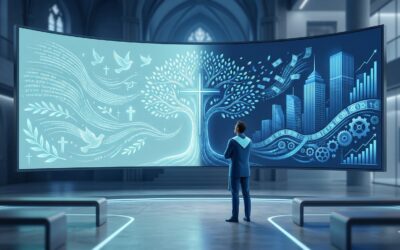
Strategic Architect: The Ultimate 16-Step Miracle Prompts Pro for Sermon & Worship
Strategic Architect: The Ultimate 16-Step Miracle Prompts ProMastering your Sermon & Worship: Story & Illustration...

The Ultimate Guide to Family Sermon Illustrations & Storytelling
The Ultimate Forensic Guide to Sermon & Worship:Story & Illustration Family StoriesMastering Sermon & Worship: Story &...

The Ultimate Forensic Sermon & Worship Illustration Master Guide
The Ultimate Forensic Sermon & Worship Illustration Master GuideMastering the art of Sermon & Worship: Story &...